


We’ve all seen it: every time you open and doomscroll LinkedIn, there’s inevitably a post that’s AI-generated and likely prompted by something along the lines of “generate a hot take on X topic.” It’s gotten so out of hand that LinkedIn even instated a “seems like AI slop” button to combat the chaos. Accounts are talking past each other in an effort to be the loudest voice on the net, all while using thoughts and ideas that aren’t even original or personally manifested. I think we can all agree on one thing: something is seriously wrong when we find noticeably human-generated content refreshing.
If we’re all so bothered by it, why do most among our masses continue to do it? Why do so many continue to perpetuate the exact steps that most find to be, at minimum, disingenuous? I have a few theories that I promise I came up with on my own.
In a Tough Job Market, Relevance is King
I can’t put a number to the amount of posts I’ve seen from exasperated, unemployed folks desperate to find a job after hundreds of submitted applications have gone unanswered. With geopolitical conflict causing economic volatility, job security is a valuable card to hold; without it, livelihood can quickly become a matter of survival. Candidates looking for the next venture, or in worst case scenarios those that have been blindsided by layoffs, find themselves in dire straits and urgently seeking employment. In an age where professional reputation in the tech industry is signaled through cutting-edge research, LinkedIn takes, and being the “pillar an entire department stands on,” standing out is critical. At the same time, “machine speed” is alive and well; it’s the forbidden fruit that looms as the potential guarantee to dominate uncharted research territory. This leads me to believe that today’s employees feel like their own creativity and technical prowess is not enough to edge out competition, especially when that competition is operating as fast as Claude can respond. With livelihood potentially at stake, and burnout at an all-time high, many are trusting LLMs with the hail mary pass that’ll land them the next opportunity. So, cue the AI-generated LinkedIn hot takes and blog posts summarizing research on topics that, honestly, the prompt engineers likely don’t fundamentally understand. It’s the chance to stay relevant in a sea of LLM noise created by other equally frustrated professionals trying to guarantee food stays on the table.
Your Payday is a Prompt Away
If you had the opportunity of spending even a moment in the Black Hat business hall a few weeks ago, you’ll know you couldn’t walk 10 feet without seeing signage around autonomous pen testing, autonomous red teaming, or agentic security solutions. As a researcher focusing on secure AI integration and development, my biggest concern arose when booth staff couldn’t answer simple questions around their flagship solution. Simple asks around “are you running frontier or local” were met with “I’m not sure how to answer that, would you like a hat?” That interaction I think best represents the tech industry in the present moment: “I’m not completely sure what I’m building or how it works, but I’m sure it’s valuable and you should buy it.”
Why was the Black Hat vendor hall a tapestry of copy-and-paste pitches? My personal take is that folks in the sector see headlines like Cursor being acquired for 60 billion dollars and feel like their payday is a prompt away. With coding agents that can build Flask web apps in minutes, and a dash of entrepreneurial confidence, many professionals feel like a lottery-sum of money is within their reach if they simply channel the right idea into the perfect prompt. Couple this mindset with the unease around job security, a fluctuating economy, and self-worth being hedged in professional success (which is its own problem), and you have the status quo.
“So You Must Not Use AI Then?”
It’s not lost on me that I’m preaching about the death of human and professional authenticity when I very clearly work in a space that enables autonomous systems and their research. It would be naive to think that anyone can move forward in today’s tech sector while shunning agentic solutions and autonomous integrations. The problem isn’t the technology; it’s how we wield it.
In a previous blog post I equated using AI in security to piloting a Gundam (or a fighter jet if you’re not THAT nerdy). You sit a seasoned fighter pilot in that jet and that individual will deliver precise bombs on target in a timely and efficient manner. You sit me in a jet and you’ll probably get an equal amount of damage, except it’ll be to the jet and surroundings. The tool is only as meaningfully impactful as the human driving (or flying) it. Autonomous systems can absolutely augment today’s security professional, but the keyword is augment, not replace. If you’re a flight or maritime nerd, you might say “alright Max explain autonomous drones and boats, how’s that not replacing humans?” My response to that is, work up the chain. The pilot may not be in the vehicle, but someone’s responsible for the oversight and overrides. A human professional is ultimately responsible for ensuring that the autonomous solution emulates and augments human capability. After all, that’s what it’s trained on, right? The human thought process is the paradigm upon which agentic solutions are built.
So yes, use AI. Augment your workflows and replicate yourself across lines of effort, but don’t outsource your thoughts and your ingenuity to a system built on probability and vector math.
Be Human
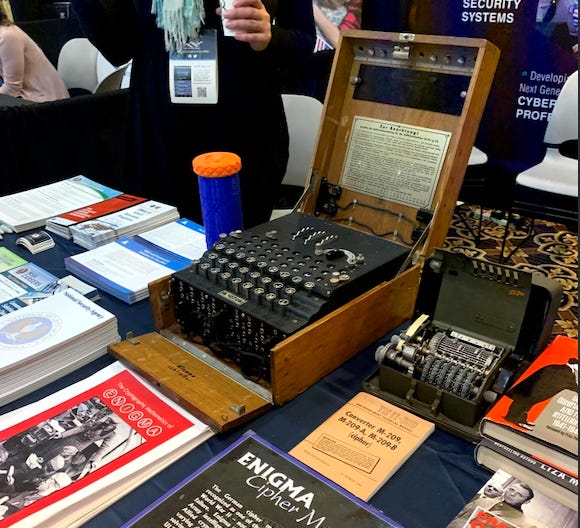
The most meaningful interactions I had in Las Vegas were with security professionals who shared both the joy and pain of today’s ecosystem as we know it. They shared in being overwhelmed, frustrated, concerned, and in some cases amused by what the tech industry has become. In those interactions, I gained the most value from listening to the problems they were faced with, how it affected them, and how they planned to tackle the adversity that lies ahead. At the end of the day, we are humans steering solutions in an effort to advance. Advance to what? Well, what moves you? Advancing humanity? Providing for a family? Traveling the world? Our “why” fuels our human ingenuity. True human ingenuity is not outsourceable, it is the engine that manifests modern marvels, built engineering feats like the SR-71, and built the Bombe that cracked the Enigma. We are so much more than the diluted output ChatGPT gives us as our LinkedIn posts for the week.